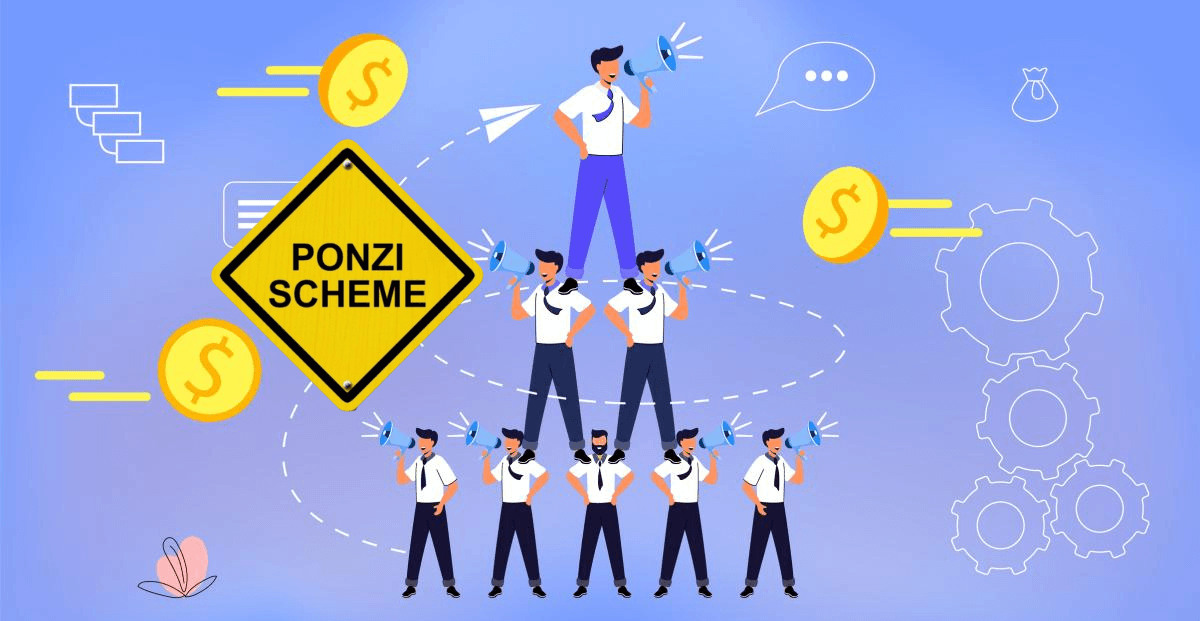
A Ponzi Scheme is an investment fraud that pays returns to earlier investors by using the capital collected from new, incoming investors, rather than from actual profits earned by any legitimate business or investment activity. Here is a breakdown of how it works and why it always collapses:
How a Ponzi Scheme Works?
- The Lure: The scammer promises unsustainably high returns with little to no risk. They often claim to have a complex, exclusive, or secret trading/investment strategy to explain the huge profits.
- The Initial Payment: The scheme pays early investors their promised “returns” using funds from the very next investors who join.
- The Illusion: The early investors, believing the scheme is legitimate and highly profitable, spread the word to friends and family, attracting a flood of new money. The scammer uses this new money to continue paying “dividends” to the growing pool of existing investors.

- The Collapse: The scheme requires an ever-increasing, exponential stream of new investors to keep up with the payouts owed to the existing investors. It eventually collapses when the flow of new money slows down (e.g., the market runs out of new victims), or when a large number of existing investors try to cash out at the same time (a panic run). When the scammer can no longer pay the promised returns, they expose the fraud, and the vast majority of later investors lose all or most of their money.
History names the scheme after Charles Ponzi, who ran a massive fraud in the 1920s based on postal reply coupons.
Ponzi Scheme Warning Signs
- Guaranteed High Returns: The scammer promises high, short-term returns and guarantees them regardless of market conditions.
- Overly Consistent Returns: Returns that never go down, even when the broader market is struggling.
- Secretive or Complex Strategy: The business model or investment strategy is vague, complex, or described using technical jargon that discourages questioning.

- Unregistered Investments/Sellers: The investment or the person selling it is not properly registered or licensed with government financial regulators (like the SEC or SEBI).
- Difficulty Withdrawing Money: You are pressured to reinvest your “profits” or face delays/fees when trying to cash out your principal investment.
Would you like to know more about Ponzi Scheme with examples? Watch the below video now.