Skip to content
scamshooter logo

Scam Shooter

Keeping You Protected

  • Money Scams
    • Advance-fee Scam
    • Scam Call Center
      • OTP Scam or Fraud
      • Tech Support Scam
      • PC Repair Scam
    • Charity Fraud Scam
    • Credit Card Fraud
    • Job Scam
    • Parcel Fraud
    • Lottery Scam
    • Loan App Scam
  • Investment Scams
    • Crypto Scam
    • Pump and Dump
    • Ponzi Scheme
    • Pyramid Scheme
  • Digital Scams
    • Gold Farming Fraud
    • LinkedIn Scam
    • QR Code Scam or Quishing
    • Business Email Compromise
    • SIM Swapping Scam
    • AI Scam
    • Digital Banking Fraud
    • Social Media Scam
    • DeepFake Fraud
    • Fake Influencer Scam
    • Robocall Scam
    • Crypto Mining Scam
    • UPI Scam
    • Digital Arrest
    • Online Shopping Scam
  • Relationship Scams
    • Honey Trapping
    • Romance Scam
    • Sextortion Scam
    • Online Dating Scam
    • Webcam Blackmail
  • Cyber Security
    • Cyber Space
      • Deep Web
      • Surface Web
      • Dark Web
    • Cyber Fraud
    • Cyber Crime
      • Ransomware-as-a-Service (RaaS)
      • Malware-as-a-Service (MaaS)
    • Cyber Attack
      • Brute Force Attack
      • Cryptojacking
      • Credential Stuffing
      • Dictionary Attack
      • DoS Attack
      • DDoS Attack
      • MitM Attack
      • Zero-Day Attack
      • Zombie Zip Attack
    • Cyber Criminals
      • Scammer
      • Fraudster
      • Script Kiddie
      • Black Hat Hacker
      • Hacktivist
      • Cyber Terrorist
    • Security Threats
      • Potentially Unwanted Program (PUP)
        • Adware
        • Browser Hijacker
      • Botnet
      • Malware
        • Loaders and Droppers
        • Virus
        • Trojan Horse
          • Infostealers
        • Ransomware
        • Worm
        • Logic Bomb
        • Rootkit
        • Fileless Malware
        • Spyware
        • Keylogger
        • Rogue Software
        • Wiper
        • Password Attack
      • Scareware
      • Cross-Site Scripting or XSS
      • Social Engineering
        • Phishing
      • SQL Injection Attack
      • Bloatware
    • Hacking and Cracking
  • Security Solutions
    • Antivirus
      • Antivirus Software for Windows
    • Anti-Spyware
    • Antimalware
    • Anti-Adware
    • VPN
      • Top 5 VPN Programs
    • Firewall
    • Sandbox
    • Two-Factor Authentication (2FA)
    • Multi-factor Authentication (MFA)
    • Infostealer Prevention Guide
  • Blog

Category: Security Threats

  • Home
  • Blog
  • Security Threats
What is a PUP or Potentially Unwanted Program?
Cyber CriminalCyber SecurityCyber ThreatInternetSecurity ThreatsSoftware

What is a PUP or Potentially Unwanted Program?

by Shilpa Rana

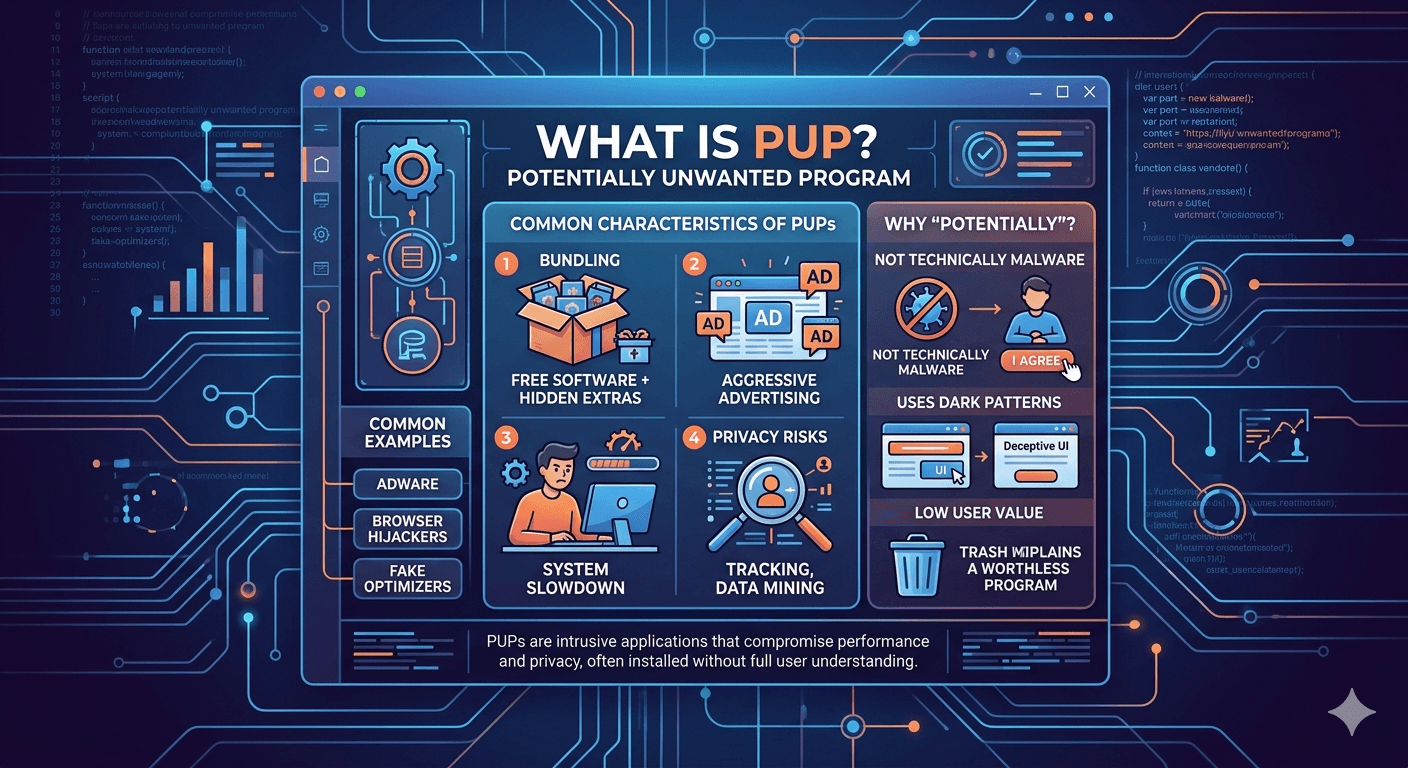
A Potentially Unwanted Program (PUP) is a category of software that may be perceived as unwanted by a user, even though the user may have technically consented to download it. Unlike malware (such as viruses or ransomware), PUPs usually don't have a purely malicious intent to destroy data. Instead, they…

What is a Browser Hijacker?
Cyber CriminalCyber SecurityCyber ThreatFraudInternetSecurity ThreatsSoftware

What is a Browser Hijacker?

by Olivia Clark

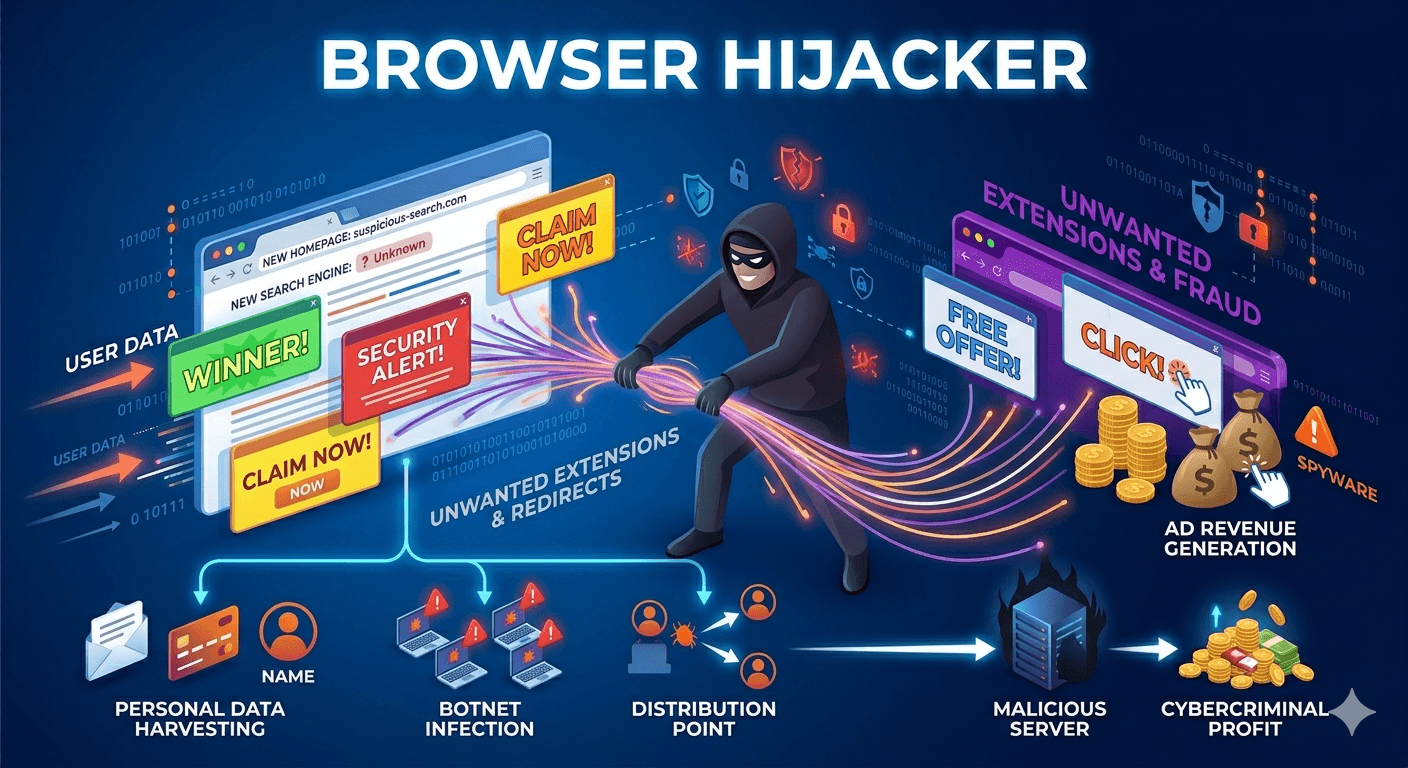
A browser hijacker is a type of unwanted software (often a form of malware or grayware) that modifies a web browser's settings without the user's permission. Its primary goal is to redirect you to specific websites, usually to increase advertising revenue or for more malicious purposes like phishing. How It…

What is an Anti-Spyware Program?
Cyber AttackCyber CriminalCyber SecurityCyber ThreatSecurity SoftwareSecurity ThreatsSoftware

What is an Anti-Spyware Program?

by Austin Wilson

An Anti-Spyware program is a type of security software designed to detect, remove, and prevent the installation of spyware on a computer or mobile device. While often bundled within larger antivirus suites, anti-spyware specifically targets software that aims to gather information about a person or organization without their knowledge. How…

What is Credential Stuffing?
Cyber AttackCyber CriminalCyber SecurityCyber SpaceCyber ThreatSecurity Threats

What is Credential Stuffing?

by Ekta Chauhan

Credential stuffing is a type of cyberattack where hackers use lists of compromised user credentials typically usernames or email addresses and their matching passwords to gain unauthorized access to user accounts on other websites. This attack relies on a common habit i.e. password reuse. Because many people use the same…

What is an Antimalware?
Cyber SecurityCyber SpaceCyber ThreatInternetSecurity SoftwareSecurity ThreatsSoftware

What is an Antimalware?

by Munish Gupta

Antimalware is a type of software program designed to prevent, detect, and remove malicious software (malware) from IT systems and individual devices. While the terms antivirus and antimalware are often used interchangeably, antimalware is generally considered a broader umbrella. It focuses on modern, sophisticated threats that go beyond traditional viruses,…

What are Loaders and Droppers?
Cyber SecurityCyber ThreatInternetSecurity Threats

What are Loaders and Droppers?

by Ankit Dyeonia

In the world of cybersecurity, Loaders and Droppers are types of helper malware designed to smuggle more dangerous threats like ransomware, spyware, or banking trojans onto a target system. While they both act as delivery mechanisms, they function in slightly different ways. Droppers A Dropper is a standalone file that…

What is a Botnet?
Cyber AttackCyber CrimeCyber SecurityCyber ThreatInternetSecurity Threats

What is a Botnet?

by Amit Thakur

A botnet (a portmanteau of "robot" and "network") is a collection of internet-connected devices such as computers, smartphones, or Internet of Things (IoT) gadgets that have been infected with malware and are controlled as a group by a single malicious actor, known as a bot herder. Unlike traditional malware that…

The Silent Threat: Infostealer Prevention Guide
Cyber AttackCyber CriminalCyber SecurityCyber ThreatInternetSecurity Threats

The Silent Threat: Infostealer Prevention Guide

by Shilpa Rana

Infostealers (like Lumma or RedLine) are the primary tools in the Malware-as-a-Service (MaaS) economy. Unlike ransomware, they don't lock your files. They quietly copy your browser cookies, passwords, and crypto-wallets and vanish. Keep reading this Infostealer Prevention Guide to learn more. The Invisible Red Flags Since most modern stealers (2025–2026…

What are Infostealers?
Cyber CriminalCyber ThreatInternetSecurity ThreatsSoftware

What are Infostealers?

by Ankit Dyeonia

Infostealers (Information Stealers) are a type of Trojan horse malware specifically designed to infiltrate a system and exfiltrate sensitive data. Unlike ransomware, which locks you out of your files, or miners, which steal your processing power, infostealers operate quietly in the background to harvest high-value credentials. How Infostealers Work? They…

What is Malware-as-a-Service (MaaS)?
Cyber AttackCyber CrimeCyber CriminalCyber SecurityCyber ThreatSecurity Threats

What is Malware-as-a-Service (MaaS)?

by Austin Wilson

Malware-as-a-Service (MaaS) is a cybercrime business model where professional developers lease or sell access to pre-built, ready-to-use malicious software and the infrastructure needed to run it. A customer (an aspiring cybercriminal) pays a fee to a MaaS provider to use tools like stealers, botnets, or loaders. This allows individuals with…

Posts pagination

1 2 … 5 Next

Useful Links

  • Terms of Service
  • Privacy Policy
  • Guidelines
  • Contact Us
  • About us
  • Vote Chori Scam
Copyright © 2026 ScamShooter.com All Rights Reserved. Theme: Original Blog By Artify Themes.

Website security powered by MilesWeb