
A Watering Hole Attack is a targeted cyberattack where a hacker infects a website that a specific group of users such as employees of a particular company or members of an industry frequently visits. Instead of sending a suspicious email (phishing) directly to the target, the attacker poisons the environment where the target feels safe.
How Watering Hole Attack Works?
The name comes from a predator in the wild that waits for its prey at a watering hole rather than hunting it across the plains. The digital process follows these steps:
- Profiling: The attacker identifies which websites the target group trusts and visits regularly (e.g., industry news sites, professional forums, or vendor portals).
- Compromise: The attacker finds a vulnerability in one of those sites and injects malicious code, often via JavaScript or an invisible iframe.
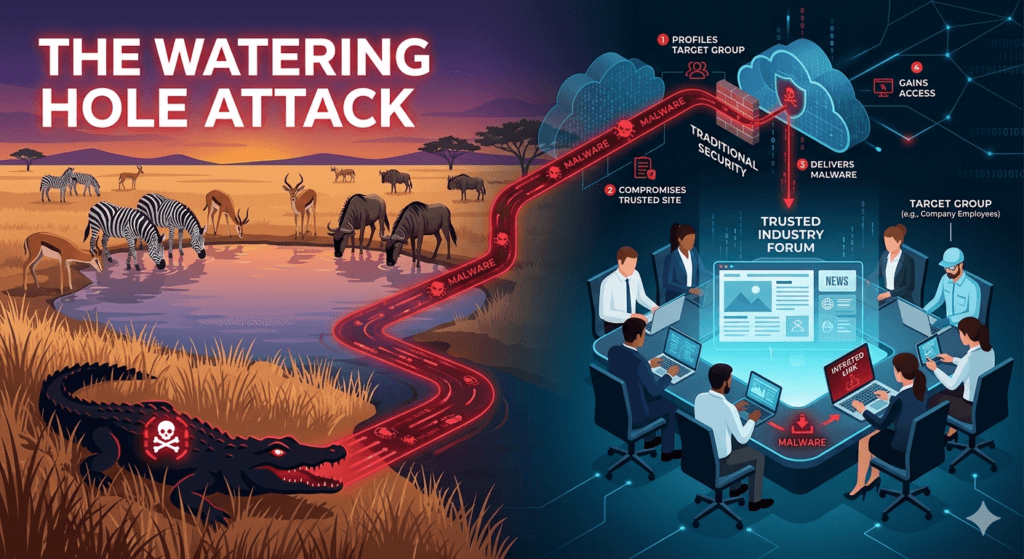
- Infection: When a member of the target group visits the infected site, the malicious code probes their computer for vulnerabilities (like an outdated browser or plugin).
- Execution: The malware is silently downloaded and installed on the user’s device, giving the attacker access to their credentials or the corporate network.
Why It’s Effective?
- High Trust: Users are less likely to be on guard when visiting a familiar professional site compared to clicking a link in a random email.
- Precision: It allows attackers to compromise high-value targets within a specific sector (like defense, finance, or healthcare) with very little direct interaction.
- Bypasses Perimeters: Since the user initiates the connection to a reputable site, some traditional web filters may not flag the traffic as dangerous.
Common Prevention Strategies
- Keep Software Updated: Most watering hole attacks rely on exploit kits that target known bugs in browsers or operating systems. Regular patching is the best defense.
- Endpoint Detection: Use security tools that monitor for unusual behavior on the device, such as a browser suddenly trying to execute a system command.
- Web Filtering: Employing solutions that scan web traffic for malicious scripts in real-time, even on trusted domains.