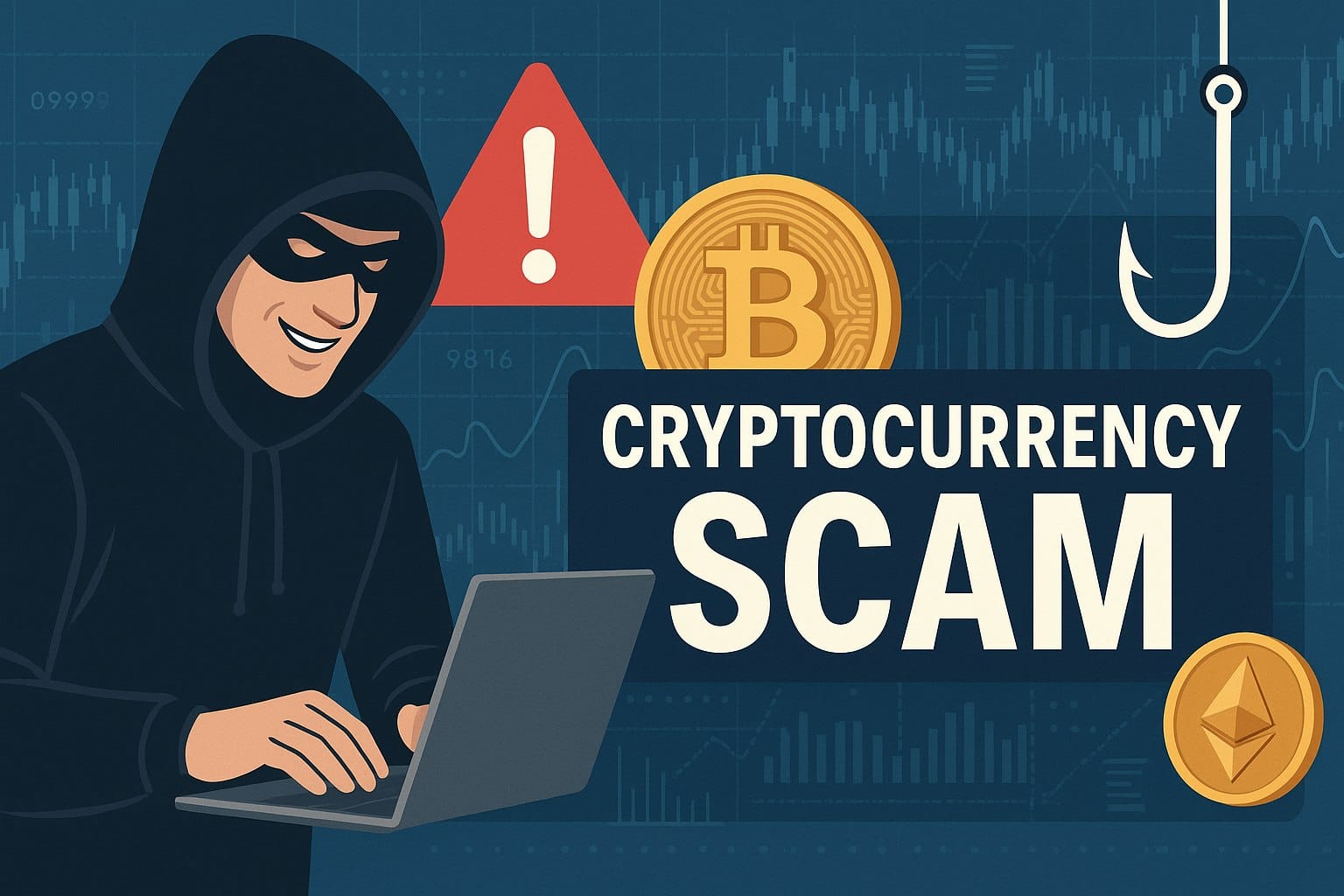
A Cryptocurrency Scam is any fraudulent scheme designed to trick victims into sending cryptocurrency, sharing their private wallet keys, or investing in fake crypto assets or platforms, exploiting the decentralized and often irreversible nature of blockchain transactions.
Since cryptocurrency transactions are typically final and hard to trace, they are a highly attractive tool for fraudsters.
Common Types of Cryptocurrency Scams
Crypto scams often take the form of familiar investment frauds, but adapted for the digital asset space:
- Rug Pulls (Fake ICOs/Tokens): Scammers create a new token, hype it up through social media to attract investors and then suddenly drain the liquidity pool (sell all the tokens they own), causing the price to crash to zero.
- Warning Sign: A new token with no clear team, no working product, a poorly written whitepaper, and promises of incredibly fast gains.
- Fake Exchanges/Wallets: Scammers create professional-looking but fake websites or apps that mimic real crypto exchanges or digital wallets. They trick you into entering your login credentials or private keys, which they then use to steal your funds.
- Warning Sign: The URL is slightly misspelled (e.g., Binance.com vs. Biinance.com); it’s an unsolicited link via email or social media.
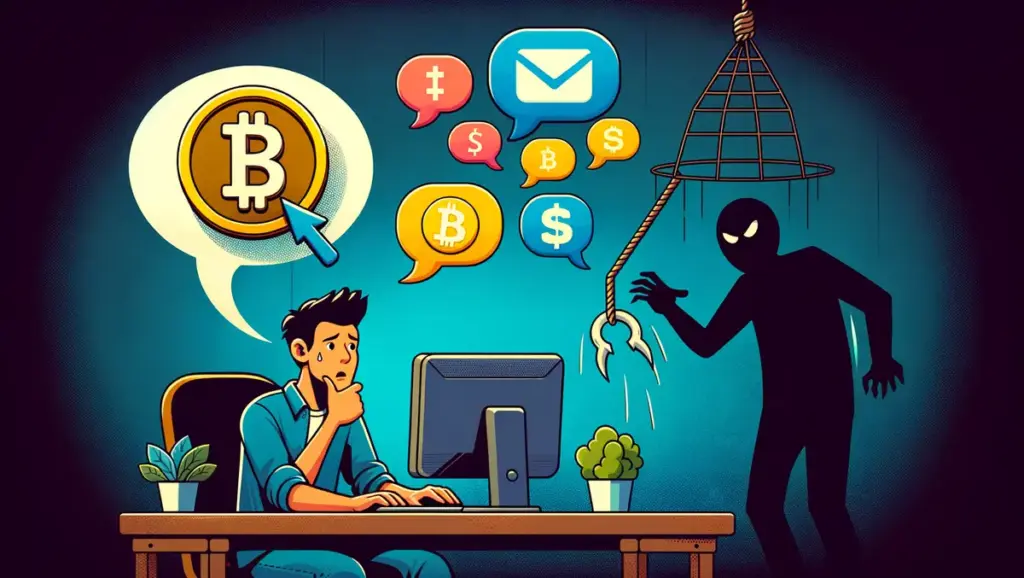
- Romance Scams (Pig Butchering): A scammer develops a romantic or friendly relationship online (often on dating apps), builds trust, and then convinces the victim to “invest” in a fake crypto platform controlled by the scammer.
- Warning Sign: A new online friend quickly pivots to discussing crypto investing and pressures you to use a specific, unknown platform.
- Giveaway Scams: Fraudsters impersonate celebrities (often via deepfake or fake social media accounts) or well-known crypto companies, claiming that if you send them a small amount of crypto, they will send back double or triple the amount.
- Warning Sign: Any promise of multiplying your money is a scam; look for fake celebrity endorsements.
- Phishing/Impersonation: Scammers send emails, texts, or social media messages pretending to be a major exchange (like Coinbase or Kraken) or a government agency, claiming there is an issue with your account. They instruct you to click a link to “verify” your wallet or send crypto to a “safe” address.
- Warning Sign: The message creates urgency, asks for your private key, or directs you to send crypto for “protection.” No legitimate firm will ask for your private key.
Key Warnings Signs to Avoid Crypto Scams
- Guaranteed High Returns: Legitimate investments, especially in volatile crypto markets, cannot guarantee high returns with no risk.
- Pressure to Act Immediately (FOMO): Scammers use urgency to prevent you from doing research.
- Unsolicited Contact: Never trust investment advice or opportunities sent out of the blue on social media, text, or email.
- Requests for Private Keys/Seed Phrase: Your private key is your password to your crypto. Never share it with anyone.
- Payment in Crypto Only: Never pay in crypto to unknown persons or agencies. If a job, a friend, or a supposed government agency demands payment exclusively in cryptocurrency, it is a scam.