
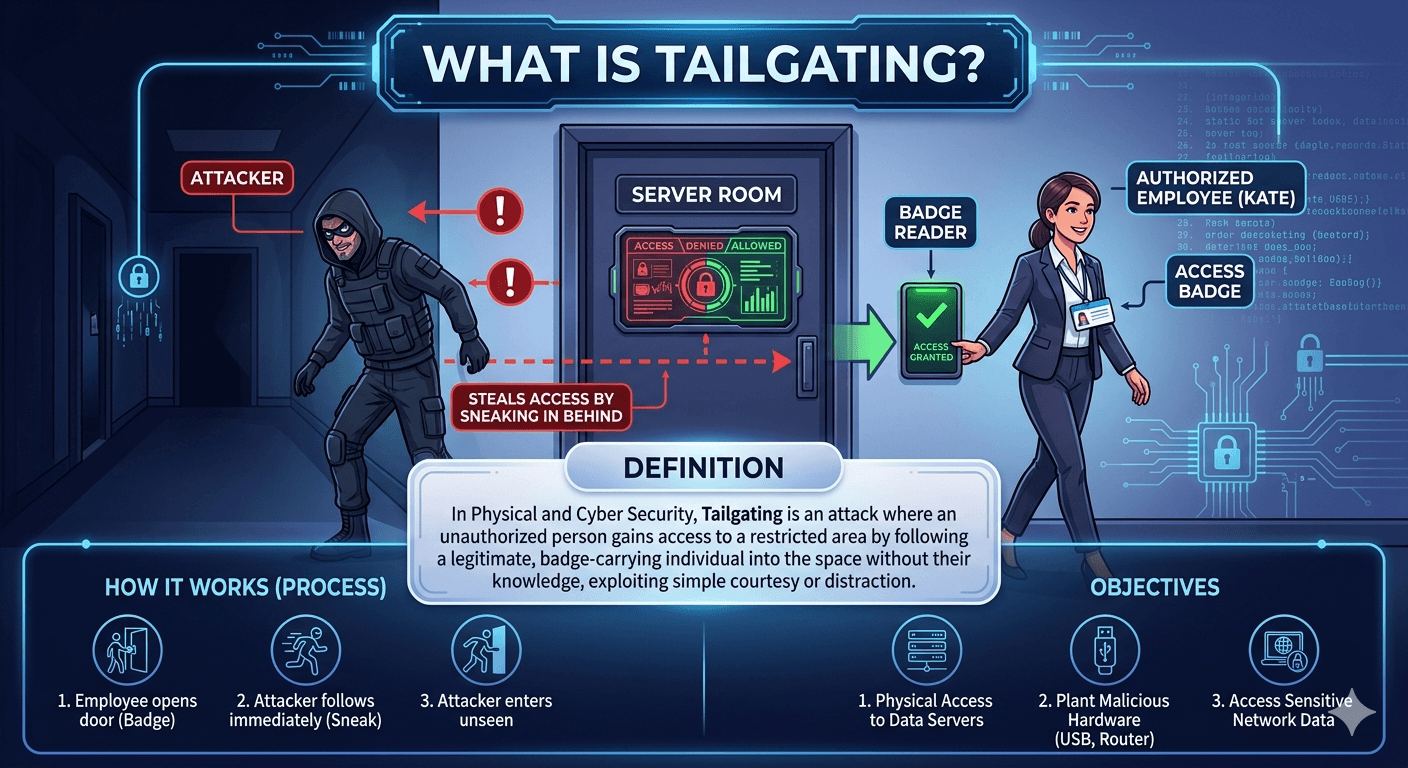
Tailgating is a security term used to describe a situation where an unauthorized person follows an authorized person into a restricted area. While the term is commonly used in traffic to describe driving too closely to the car in front, in the context of cybersecurity and physical security, it refers to a specific type of social engineering breach.
How Tailgating Works?
The core of tailgating is exploiting a moment of access. An attacker waits for an authorized employee to open a secure entry point (using a keycard, PIN, or biometric scan) and then slips in behind them before the door closes or locks.
Common Tactics
Attackers rarely look like intruders. Instead, they use psychological tricks to blend in:
- Helpful Disguise: An attacker might carry heavy boxes or large stacks of coffee, making it look like they need help with the door. Out of a natural urge to be polite, the authorized person holds the door open.
- Busy Professional: They may walk in while pretending to be on an urgent phone call or looking at a clipboard, projecting an air of belonging that discourages others from questioning them.
- Uniform: Wearing a delivery or maintenance uniform (like a fake courier or technician vest) often bypasses a person’s suspicion.
Tailgating vs. Piggybacking
While often used interchangeably, there is a subtle difference:
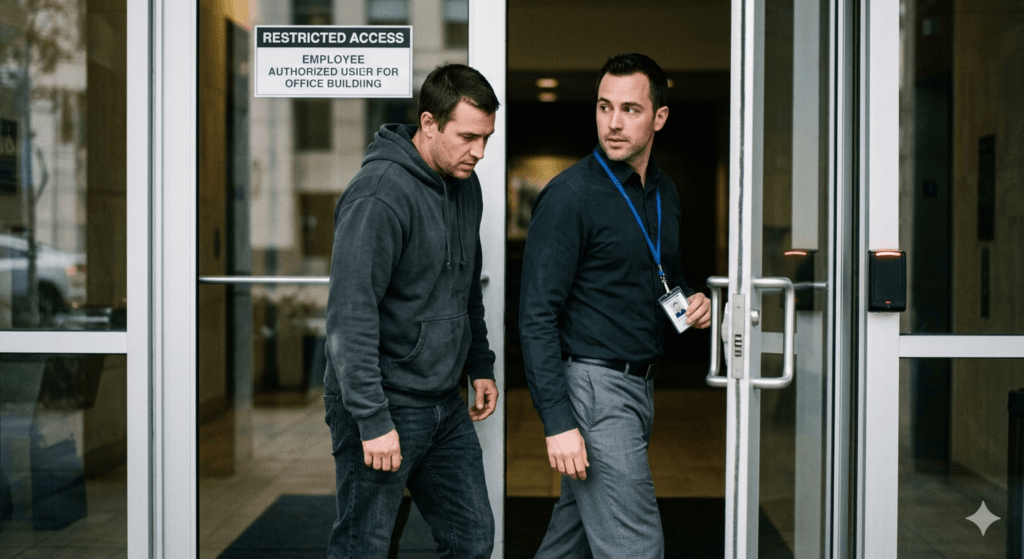
- Tailgating: The authorized person is usually unaware that someone slipped in behind them.
- Piggybacking: The authorized person knowingly lets the individual in (e.g., holding the door open), often believing they are being polite or helpful to a colleague.
Why It’s Dangerous?
Tailgating is a high-reward tactic for attackers because it bypasses expensive digital security measures (like encryption or firewalls) by granting physical access to:
- Unlocked computers or server rooms.
- Sensitive physical documents left on desks.
- Internal network ports where they can plant malware or sniffers.
How to Prevent it?
To counter tailgating, organizations often move beyond simple locks and use:
- Man-traps: Small spaces with two sets of interlocking doors where the first door must close before the second can open.
- Optical Turnstiles: Sensors that detect if two people pass through on a single badge swipe.
- Security Culture: Training staff to understand that requiring everyone to badge in individually is a standard safety protocol, not an act of rudeness.