

Malvertising or malicious advertising is a cyberattack technique where hackers inject malicious code or malware into legitimate digital advertising networks. Unlike traditional adware, which relies on a compromised computer to display annoying pop-ups, malvertising exploits the infrastructure of online advertising to infect healthy devices. This means a user can encounter a malicious ad on a completely safe, reputable mainstream website without ever clicking on a shady link.
How Malvertising Works?
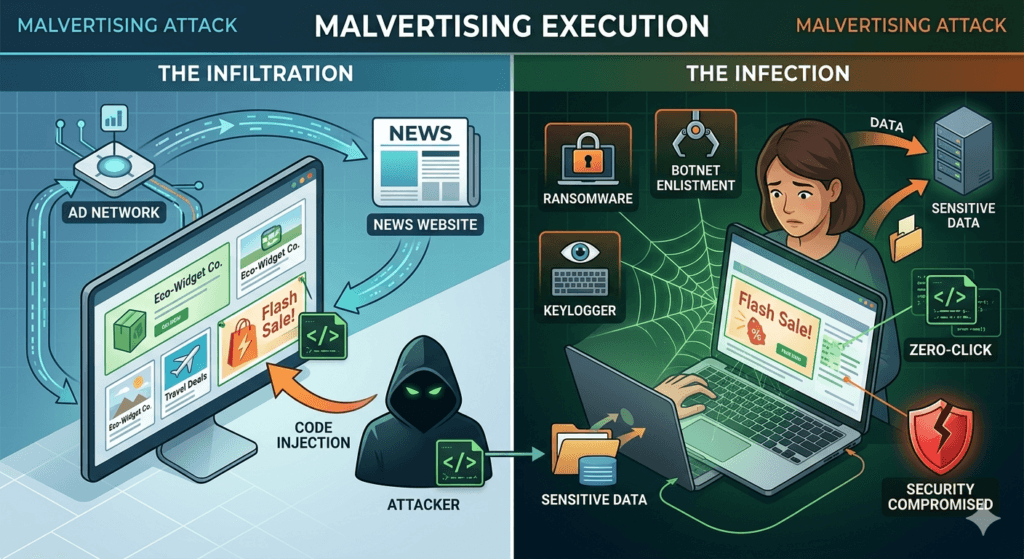
Malvertising is incredibly sneaky because it leverages the complex, automated ecosystem of digital ad buying (programmatic advertising).
- Infiltration: Attackers buy ad space from legitimate ad networks, often masquerading as a clean company or promoting a harmless product initially to pass automated security checks.
- Switch: Once the ad is approved and placed into the network’s distribution stream, the attacker updates it with malicious scripts or redirects.
- Distribution: The ad network displays the ad on popular, high-traffic websites (like news outlets or blogs) that trust the ad network to vet the content.
- Execution: When a user visits the clean website, the malicious ad loads. Depending on the attack type, it can infect the user instantly.
Two Main Types of Exploitation
Malvertising attacks generally fall into two categories based on how they trigger the infection:
- Click-Based Attacks: These operate like typical phishing schemes. The user must physically click on the ad, which then redirects them to a malicious landing page or triggers an immediate file download (often bundled with malware or ransomware).
- Drive-By Downloads (Zero-Click): This is the most dangerous form. The ad contains pre-written code (like JavaScript) that runs automatically as soon as the page loads. It silently scans the user’s browser or operating system for unpatched security vulnerabilities and installs malware in the background, no clicks required.
What is the Goal of a Malvertising Attack?
Because it can reach millions of users simultaneously via trusted platforms, attackers use malvertising for heavy-hitting campaigns:
- Distributing Ransomware: Locking users out of their data and demanding payment.
- Deploying Spyware & Keyloggers: Stealing sensitive corporate data, personal login credentials, and credit card numbers.
- Creating Botnets: Quietly enslaving infected devices into a network used for massive Distributed Denial of Service (DDoS) attacks.
- Cryptojacking: Stealing the device’s processing power to mine cryptocurrency in the background, slowing it to a crawl.
Malvertising vs. Adware: The Core Difference
It is common to confuse the two, but they operate on completely opposite dynamics:
- Origin
- Adware: The device is already infected by unwanted software, which forces ads onto your screen.
- Malvertising: The device is clean. The infection vector lives out on the web inside an ad network.
- User Action
- Adware: Usually bundled with free software downloads that the user consented to install.
- Malvertising: Happens automatically while browsing legitimate, trusted websites.
- Primary Goal
- Adware: Generate aggressive ad revenue for the creator (mostly a nuisance).
- Malvertising: Deliver severe malware, steal data, or exploit system vulnerabilities.
How to Protect Yourself?
Because malvertising piggybacks on trusted websites, standard safe-browsing habits aren’t always enough. You need technical layers of defense:
- Use a Reliable Ad Blocker: Robust ad blockers prevent the ads and their underlying tracking scripts from loading in your browser entirely, cutting off the delivery system.
- Keep Software and Browsers Updated: Drive-by downloads rely heavily on software vulnerabilities. Promptly installing browser updates and OS patches closes the doors attackers try to slip through.
- Disable Unnecessary Plugins: Turn off or uninstall outdated browser extensions and plugins (like old Flash or Java remnants), as these are historical goldmines for exploit kits.
- Deploy Strong Antivirus Software: A proactive security suite with real-time web protection can intercept malicious scripts and block downloads before they can execute on your local drive.