
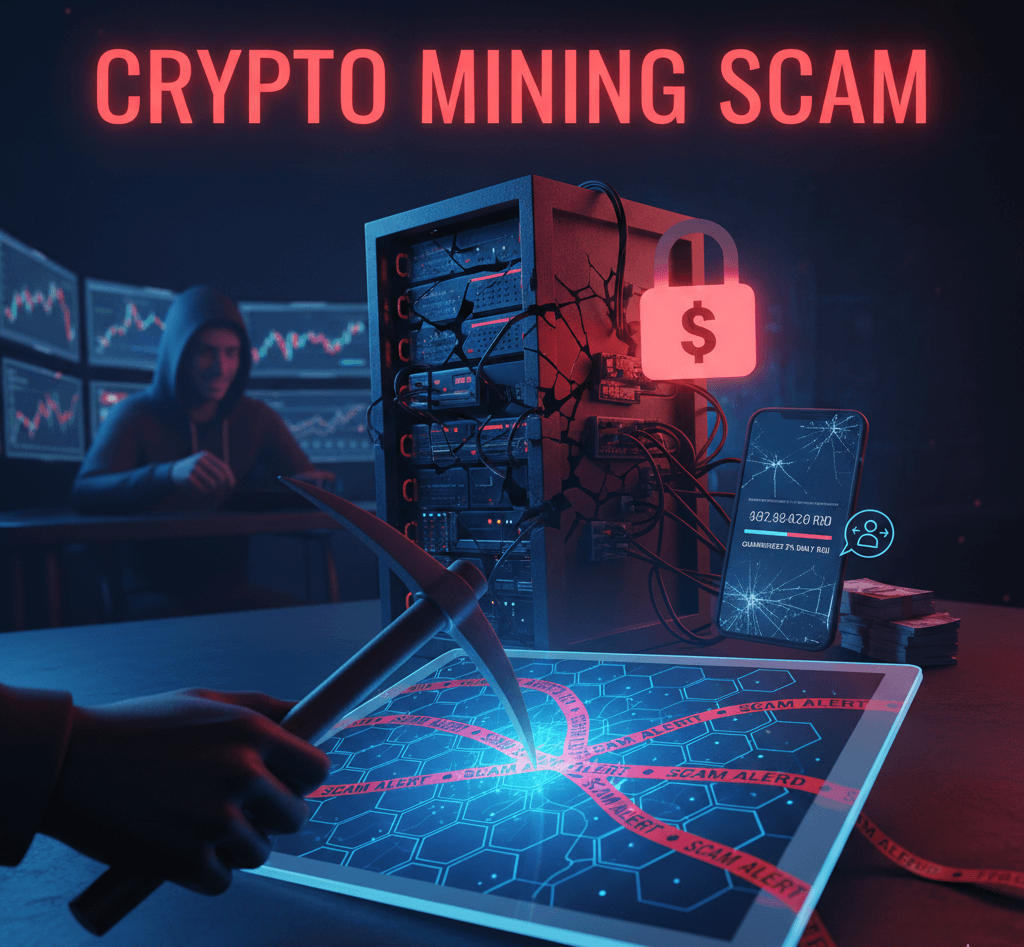
A crypto mining scam is a fraudulent scheme where scammers trick you into paying for “mining services” or “mining equipment” that either don’t exist or don’t work as promised. In a legitimate setup, “mining” is the process of using powerful computers to solve complex math problems to secure a blockchain and earn new coins as a reward. Scammers exploit the complexity of this process to steal money from people looking for “passive income“.
Common Types of Crypto Mining Scams
- Cloud Mining Scams: You pay a fee to rent computing power from a remote data center. In reality, there is no data center; the scammer just takes your money.
- Fake Hardware: Scammers sell non-existent or brick (broken) mining rigs at a discount. After you pay, the seller disappears or sends a box of junk.
- Pig Butchering: A scammer builds a romantic or friendly relationship with you online, then helps you invest in a fake mining platform that shows fake profits to encourage more investment.
- Malicious Apps: You download a mining app that claims to mine crypto on your phone. Instead, it steals your personal data or charges you fees for upgrades that do nothing.
- Cryptojacking: This isn’t an investment, it’s a theft. Hackers use malware to hijack your computer’s power to mine crypto for them, leaving you with a slow PC and a high electric bill.
Red Flags of Crypto Mining Scam
If you see any of these, it is almost certainly a scam:
- Guaranteed Returns: Real mining is volatile. If they promise a specific daily or monthly profit (e.g., “Guaranteed 2% daily ROI”), run.
- Aggressive Referrals: If the platform focuses more on you recruiting new members than on the actual mining, it’s likely a Ponzi scheme.
- Withdrawal Fees: You try to take your money out, and they tell you that you must pay taxes or release fees upfront first. You will never see that money again.
- Anonymous Teams: Legitimate companies have public founders, physical addresses, and registration details. Scams usually hide behind vague expert personas.
How to Protect Yourself?
- Do a Reverse Search: Copy-paste the “About Us” text or team photos into Google. Scammers often reuse the same website templates and stock photos.
- Verify the Hashrate: Legitimate cloud miners allow you to verify that their mining power is actually active on the blockchain.
- Check for “https” and Domain Names: Scammers use look-alike URLs (e.g., biinance.com instead of binance.com).
- Never Mix Romance and Finance: If someone you met on a dating app suggests a crypto investment, it is a scam 100% of the time.
If you have already lost money, be wary of “Recovery Scams“. Anyone who contacts you claiming they can “hack the blockchain” to get your money back is just trying to scam you a second time.