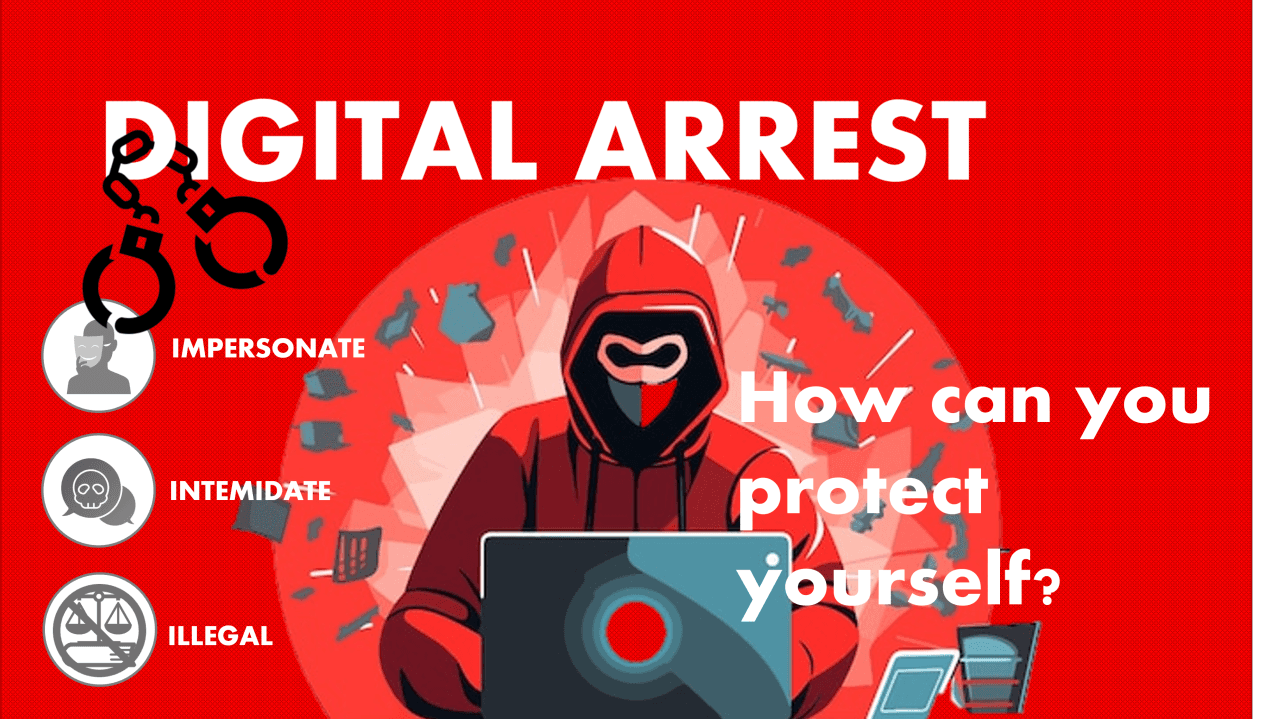
A “Digital Arrest” is a term used to describe a sophisticated cyber criminal scam. It is important to note that there is no concept of “Digital Arrest” under the actual law in most jurisdictions, including India. Fraudsters use this purely deceptive tactic to extort money.
Digital Arrest Scam is a fear-based scam where cyber criminals impersonate law enforcement or government officials (such as CBI, Customs, Police, ED, or Judges) to threaten and intimidate a victim into transferring money or sharing sensitive information.
How Digital Arrest Scam Works (Modus Operandi)?
- Initial Contact: The scammer calls or messages the victim, often claiming to be from a courier service, bank, or telecom provider, and mentions an issue like an illegal package or a suspicious transaction linked to the victim’s ID.
- Impersonation & Panic: The scammer then transfers the call to someone posing as a senior law enforcement officer (like a CBI or Police official). They accuse the victim of serious crimes (e.g., money laundering, drug trafficking, or cybercrime). They create panic by threatening immediate arrest, freezing bank accounts, or cancelling passports.
- Digital “Verification”: To make the scam seem legitimate, the criminals often coerce the victim into a video call (e.g., on WhatsApp or Skype). The scammer appears in a fake uniform or uses a fake “police station” backdrop. They send forged documents like fake arrest warrants or legal notices via email or messaging apps, sometimes misusing the names of actual high-ranking officials.
- Coercion for Payment: The scammer tells the victim they are now “under digital arrest” and must cooperate fully and not contact family or lawyers. They demand an immediate payment, often called a “security deposit” or “fine,” to settle the case and avoid legal action.
- Payment Method: Fraudsters almost always demand payments through untraceable channels like bank transfers to “mule” accounts, UPI IDs or digital payment apps, cryptocurrency, or prepaid gift cards. The scammer keeps the victim on the call until they complete the transfer, preventing them from seeking advice.

How to Protect Yourself from Digital Arrest Scam?
- Verify Identity: Legitimate law enforcement agencies will never demand immediate payment over the phone or video call to avoid an arrest. If you receive such a call, hang up immediately and independently verify the information by contacting the official agency through their official, publicly listed phone number.
- No Digital Arrests: Remember, the law provides no way for officials to conduct an arrest over a video call or to send an arrest warrant via WhatsApp or email.
- Protect Personal Information: Never share sensitive details like your Aadhaar number, bank account details, OTPs, or financial information with unsolicited callers.
- Report the Scam: If you receive a suspicious communication, report it to the national cybercrime helpline and the relevant government cyber police portal.
Would like to learn more about Digital Arrest Scam? Check out the below video for details.