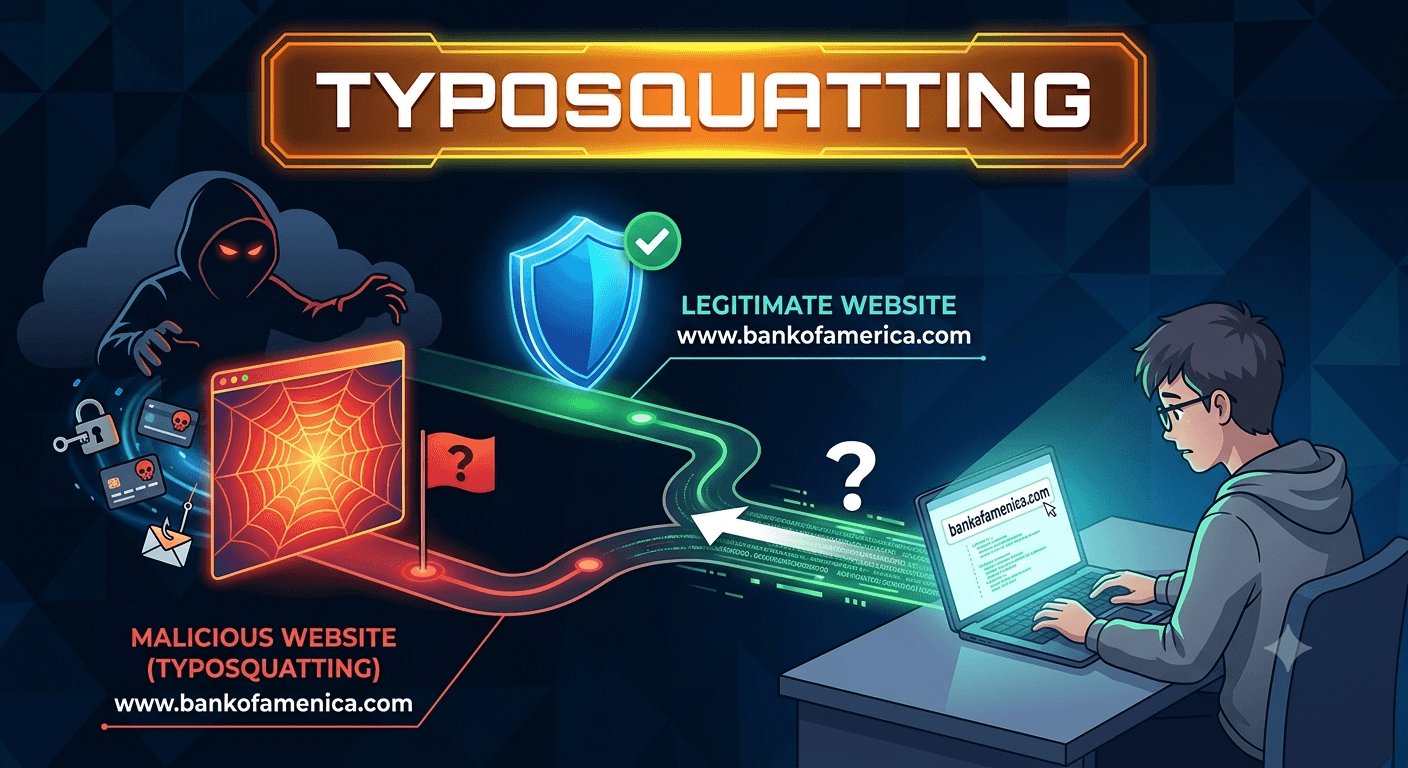
What is Typosquatting?
Typosquatting (also known as URL hijacking, sting sites, or fake URLs) is a form of cybercrime where hackers register domain…

Keeping You Protected
Typosquatting (also known as URL hijacking, sting sites, or fake URLs) is a form of cybercrime where hackers register domain…
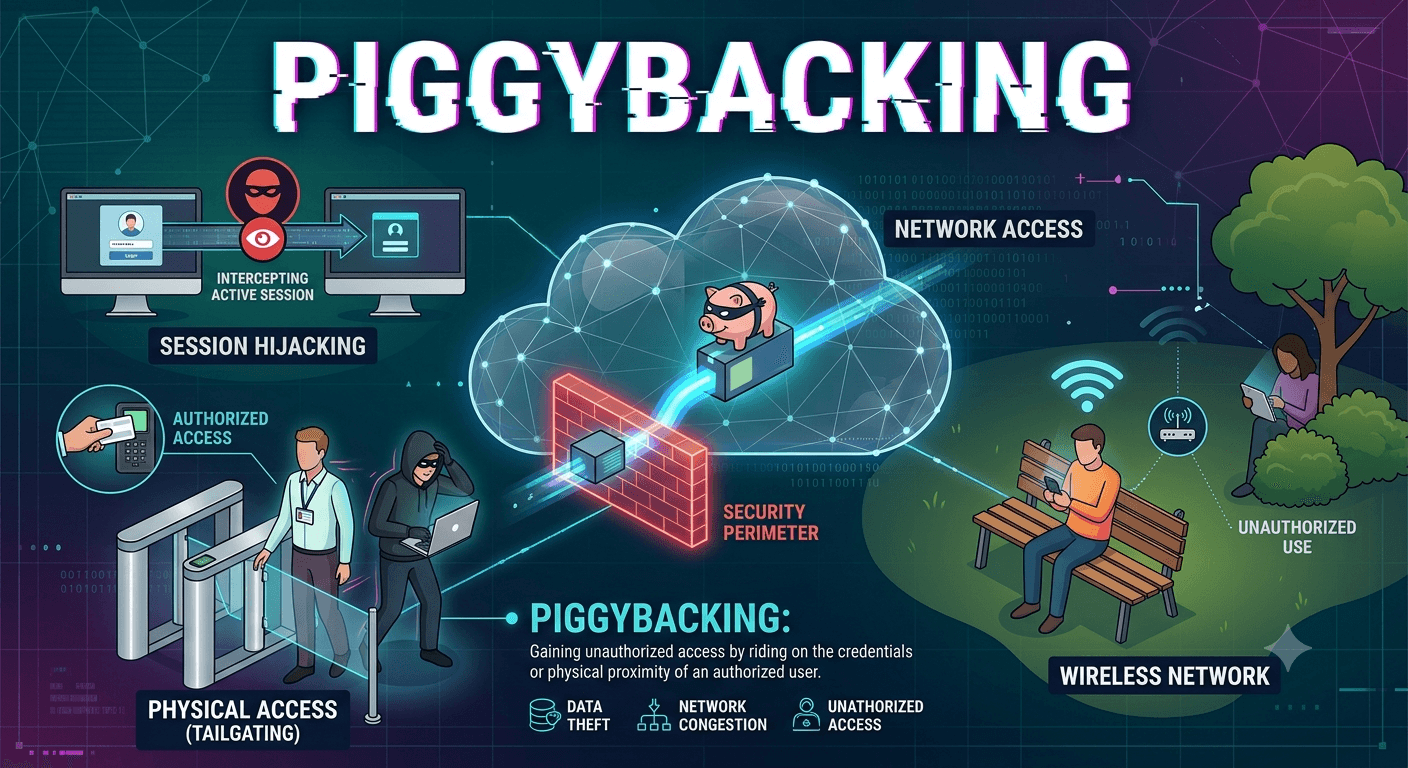
In the context of technology and security, piggybacking refers to gaining unauthorized access to a restricted area, system, or connection…
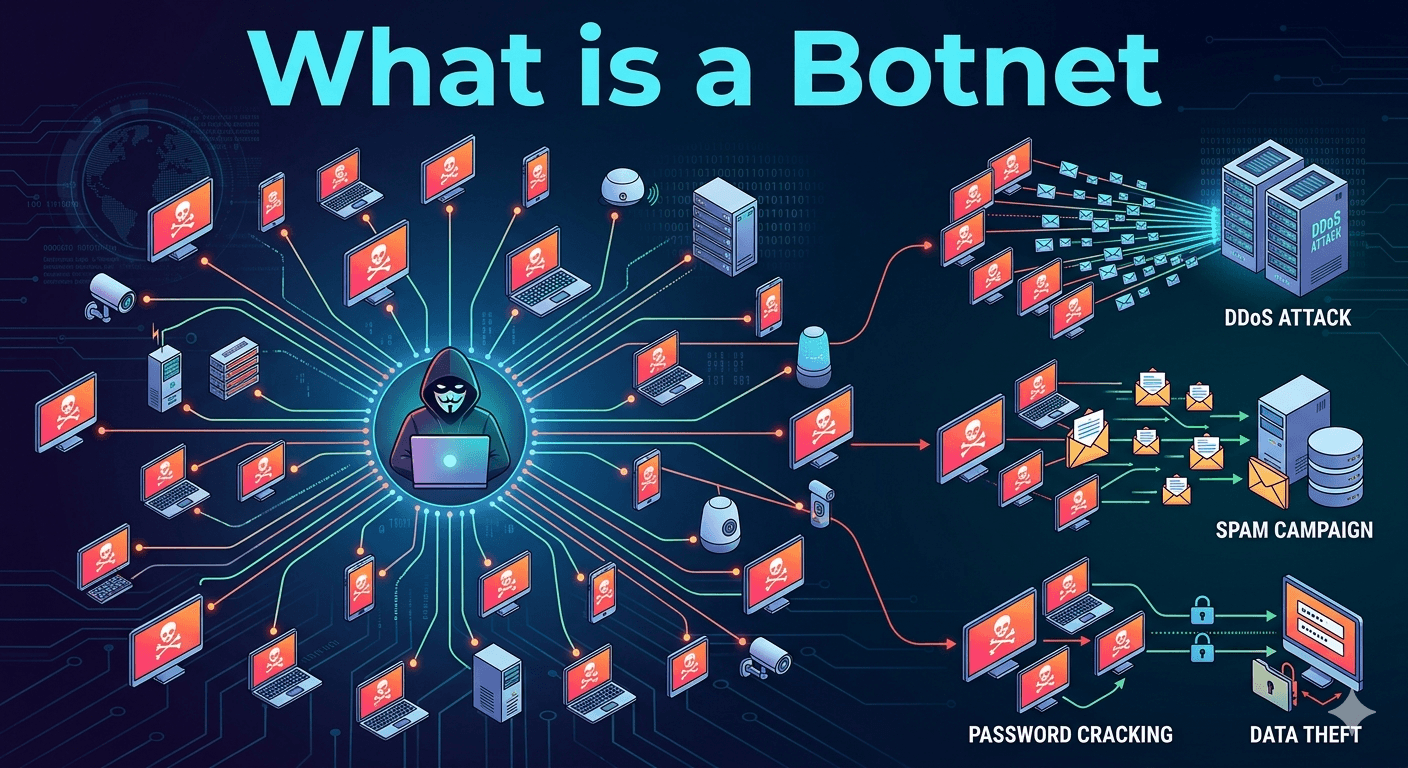
A botnet (a portmanteau of “robot” and “network”) is a collection of internet-connected devices such as computers, smartphones, or Internet…
Malware-as-a-Service (MaaS) is a cybercrime business model where professional developers lease or sell access to pre-built, ready-to-use malicious software and…
Ransomware-as-a-Service (RaaS) is a criminal business model that mirrors the legitimate Software-as-a-Service (SaaS) framework. In this ecosystem, professional malware developers…
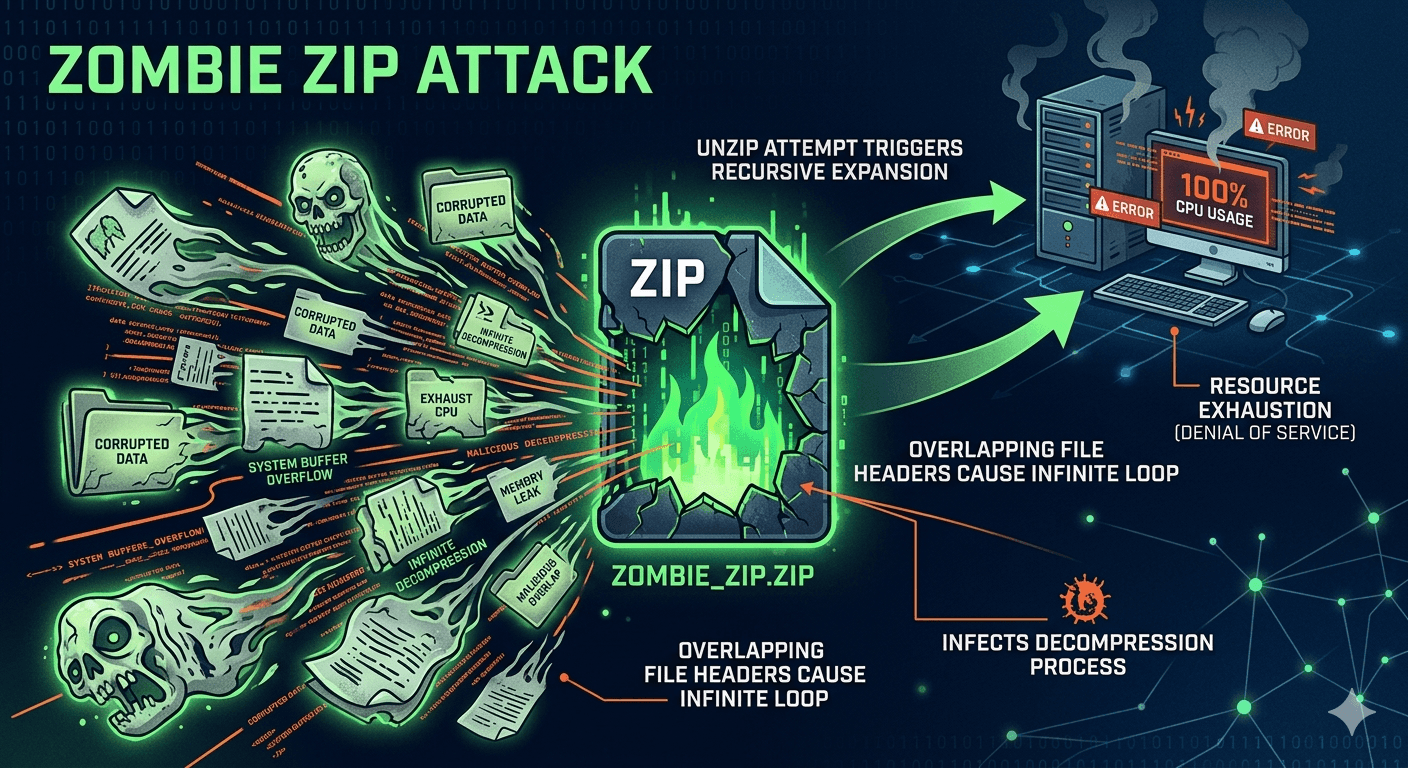
A Zombie Zip Attack is a sophisticated variation of a Zip Bomb (or Decompression Bomb) designed to crash a system…
A Zero-Day Attack is a cyberattack that exploits a software or hardware flaw before the developers are even aware it…
An Advance-fee Scam is a form of fraud where a scammer convinces a target to pay a relatively small amount…
At its core, credit card fraud is a form of identity theft where someone uses your credit or debit card…
Think of Multi-Factor Authentication (MFA) as a high-security lock that requires more than just a single key to open. It’s…

![[ALERT] What is a Zero-Day Attack?](https://scamshooter.com/wp-content/uploads/2026/03/Google-Chrome-Zero-Day-Attack.png)