
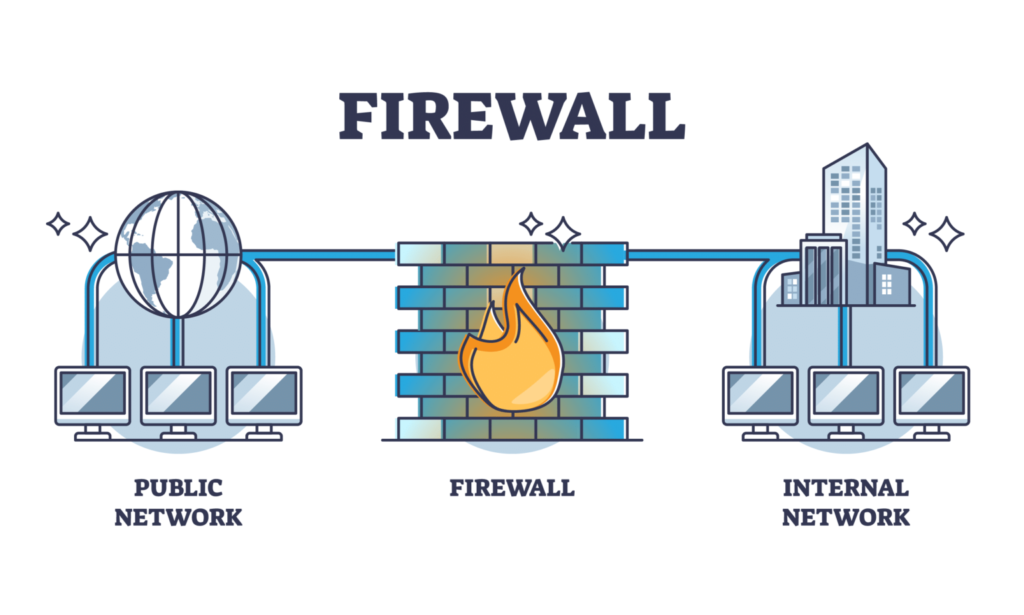
A Firewall is a network security system that monitors and controls incoming and outgoing network traffic based on predetermined security rules. Its primary purpose is to establish a barrier between a trusted internal network and untrusted external networks.
Think of a it as a security checkpoint or a bouncer at the door of your network.
Key Functions of a Firewall
- Traffic Filtering: It inspects every piece of data (called a packet) attempting to enter or leave the network. It uses a set of rules to decide whether to allow, block, or drop the traffic.
- Access Control: It prevents unauthorized access to your private network and resources from external users or threats.
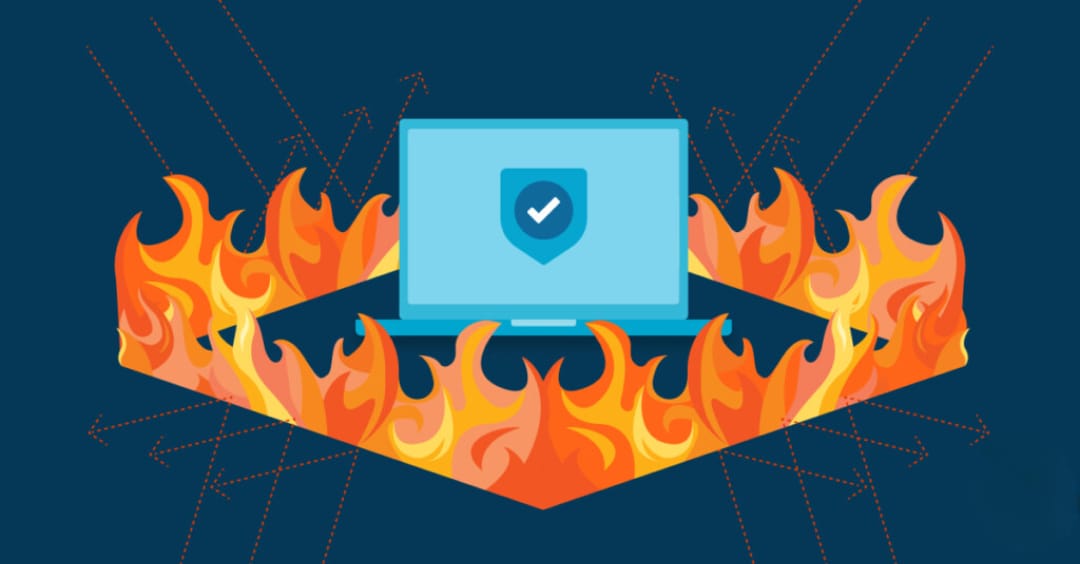
- Threat Protection: It blocks common threats such as hackers, worms and some malware by preventing malicious data from reaching computer.
- Enforcing Policy: It can be configured to enforce security policies, such as restricting access to certain websites or applications for users within the network.
Types of Firewalls
Firewalls can be categorized based on their form factor and where they operate in the network:
- Hardware Firewall: A physical device, often built into your home or office router, that sits at the network perimeter.
- Software Firewall: An application installed on an individual computer (like the built-in Windows or macOS firewall).
- Next-Generation Firewall (NGFW): Combines traditional firewall features with advanced security capabilities like deep packet inspection (DPI), intrusion prevention systems (IPS), and application control.
In summary, while Antivirus software protects an individual device by scanning, detecting, and removing malware on the inside, a Firewall protects the boundary of the network by inspecting and regulating network traffic coming in and going out. You need both for comprehensive security.