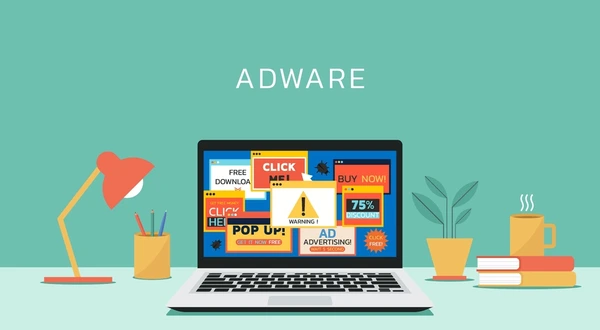
Adware is a short form for Advertisement-supported software. It is a type of software that automatically displays, downloads, or plays advertisements on your computer or mobile device.
While some software uses ads legitimately to support a free product (and you consent to it), the term “Adware” is most commonly used to refer to unwanted or malicious programs that display excessive, unsolicited, or intrusive ads without your explicit permission.
How Adware Works?
Adware developers generate revenue based on:
- Pay-per-view: They get paid simply for displaying the ad to you.
- Pay-per-click: They get paid if you click on the advertisement.
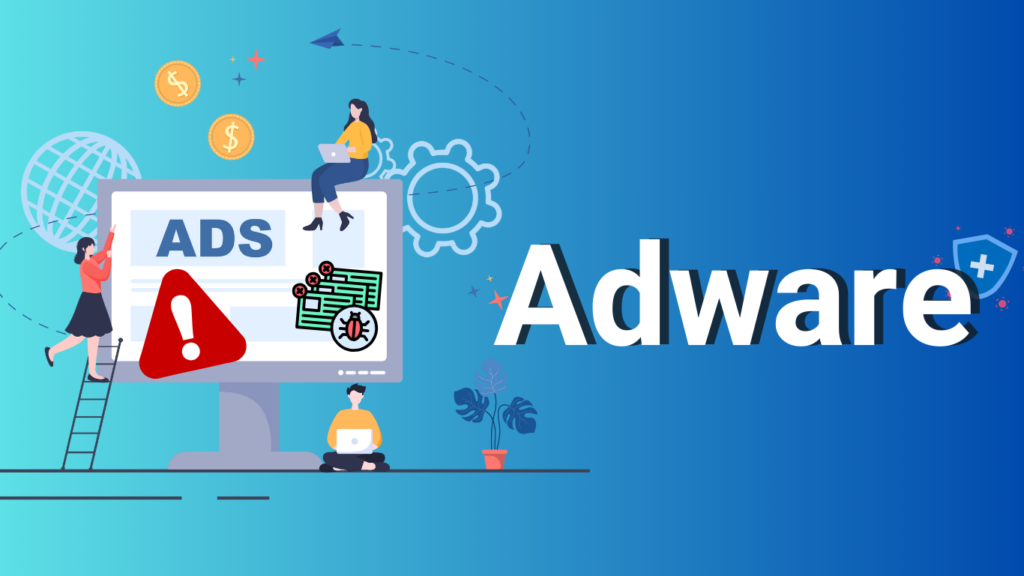
To maximize this revenue, the adware program generally performs these steps:
- Infiltration: It often gets installed secretly, usually by being bundled with free software or apps that you intended to download, or through malicious pop-ups and links.
- Tracking: The program starts tracking your online activity (search queries, websites visited, and browsing history).
- Ad Bombardment: It uses this information to deliver highly targeted, aggressive, and constant advertisements often as pop-ups, banners, or by injecting ads onto legitimate websites where they shouldn’t appear.
- Browser Hijacking: More malicious types can change your browser’s settings. Common actions like altering your homepage or default search engine, to force you onto specific advertising sites.
Dangers of Adware
While often viewed as merely an annoyance, malicious adware poses significant security risks:
- System Performance Degradation: It consumes your computer’s resources (CPU and memory) and internet bandwidth. This causes your device and browser to slow down, crash, or freeze.
- Privacy Compromise: The tracking component of adware often acts as Spyware. It collects sensitive data about your browsing habits that can be sold to third parties.

- Exposure to Further Malware: The pop-up ads and redirects can lead to malicious websites that attempt to trick you into downloading more dangerous forms of malware, such as Trojans, Ransomware, or Keyloggers.
- Browser Hijacking: It can redirect your web searches to sites filled with even more ads or malicious content.
In short, Adware is often classified as a Potentially Unwanted Program (PUP), and while not all of it is strictly “malware,” the intrusive and dangerous variants are a significant cybersecurity concern.