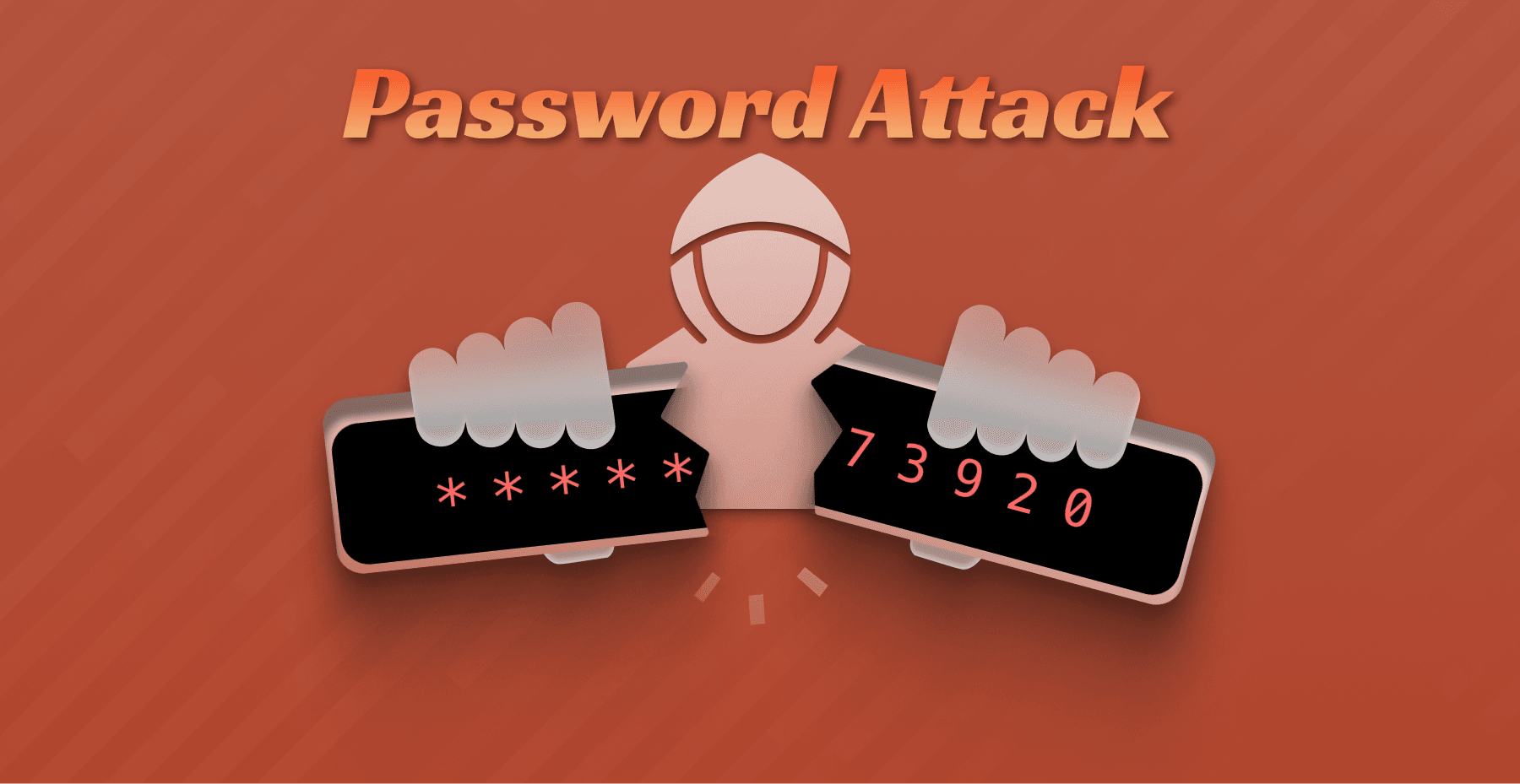
A Password Attack is a cybersecurity threat where an attacker attempts to gain unauthorized access to a system, account, or network by “cracking” or “stealing” a user’s password. Because passwords are often the only barrier between a hacker and sensitive data, these attacks are among the most common methods used to initiate data breaches.
Common Types of Password Attacks
Attackers use various techniques depending on whether they are guessing the password or intercepting it.
- Brute Force Attack: The “sledgehammer” approach. An attacker uses automated software to systematically try every possible combination of letters, numbers, and symbols until they find the correct one.
- Vulnerability: Short, simple passwords (e.g., 123456).
- Modern Twist: Password Spraying is a variation where an attacker tries one common password (like Winter2024!) across thousands of different usernames to avoid account lockouts.
- Dictionary Attack: Similar to brute force, but instead of trying every combination, the software runs through a “dictionary” of commonly used words, phrases, and leaked passwords.
- Vulnerability: Using real words or common substitutions (e.g., P@ssw0rd1).
- Credential Stuffing: This attack exploits the fact that many people reuse the same password across multiple sites. Attackers take a list of usernames and passwords from a previous data breach (like a leaked LinkedIn or Adobe database) and “stuff” them into other sites like Amazon or Gmail to see if they work.
- Phishing: This is a form of Social Engineering. An attacker sends a deceptive email or text that looks like it’s from a trusted source (like your bank or IT department), tricking you into entering your credentials on a fake login page.
- Keylogging: Attackers install malware on a victim’s device that records every keystroke made. The software then sends the logs back to the attacker, revealing every username and password typed.
- Rainbow Table Attack: This is a more technical “offline” attack. When companies store passwords, they usually convert them into a “hash” (a scrambled string of characters). A Rainbow Table is a massive, precomputed list of these hashes. Attackers compare the stolen database of hashes against the table to reveal the original passwords.
How to Protect Yourself?
You can significantly reduce your risk by following these four steps:
- Multi-Factor Authentication (MFA): Even if a hacker steals your password, they can’t get in without the second “factor” (like a code on your phone).
- Password Managers: These tools (e.g., Bitwarden, 1Password) generate and store unique, complex passwords for every account so you don’t have to remember them.

- Use Passphrases: Instead of “P@ssword123,” use a long string of random words like correct-horse-battery-staple. Length is more important for security than complexity.
- Check for Breaches: Use services like Have I Been Pwned to see if your credentials have been leaked in a past hack.