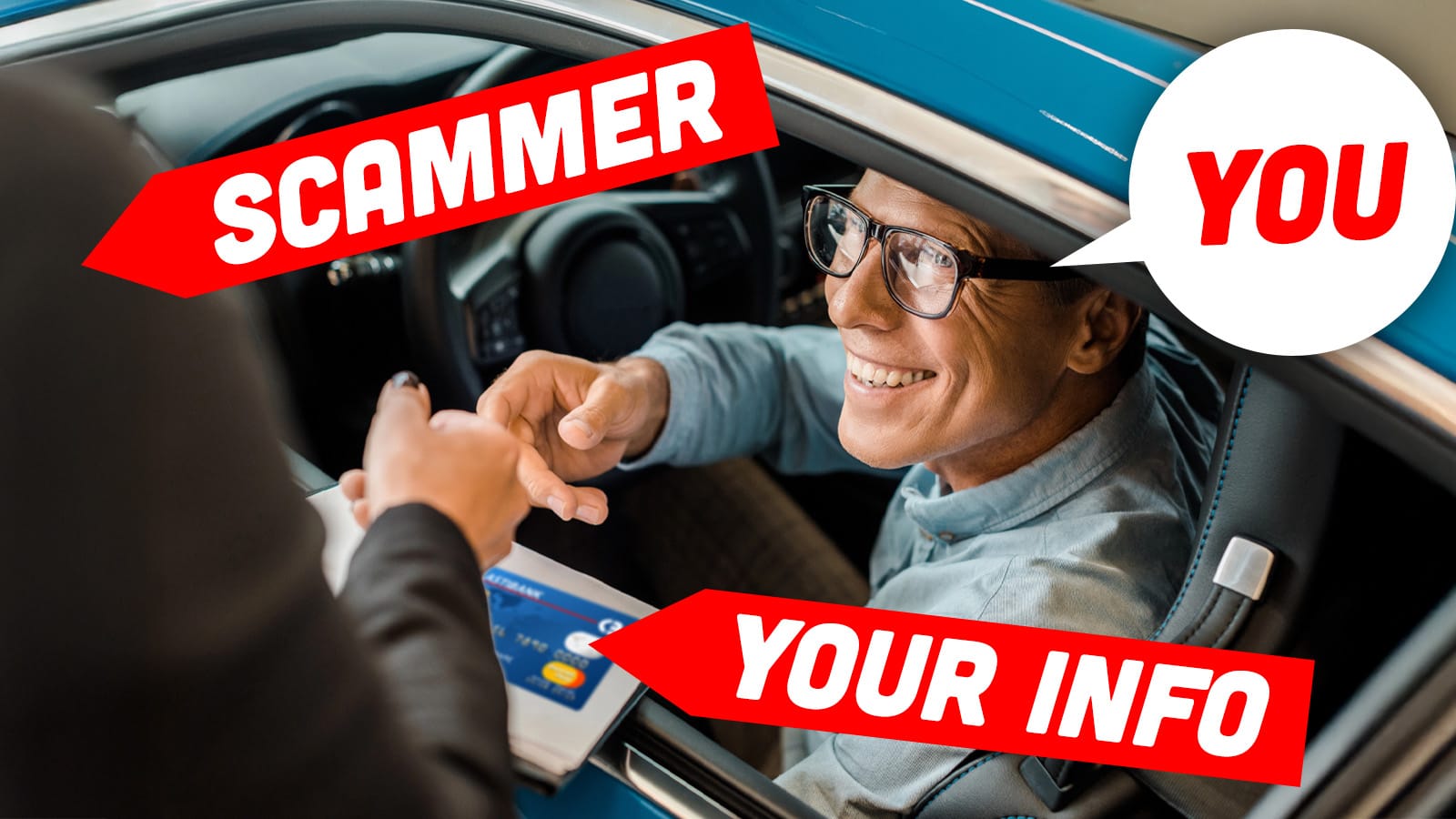
A scammer defrauds or tricks people into giving up items of value usually money or personal information through deceptive schemes and lies known as scams.
Key Characteristics of a Scammer
- Deception and Fraud: They use dishonest methods to manipulate and trick their victims.
- False Identity: They often pose as trustworthy people like government agency or bank representative and even a friend or relative.
- Exploitation: They play on emotions, like fear, greed, compassion, or a sense of urgency, to bypass a victim’s better judgment.
- Goal: Their primary goal is to get the victim to willingly give up money, valuables, or sensitive personal data.
Common Scammer Tactics
Scammers use various tactics across phone calls, emails, text messages, and social media. Watch out for people who:
- Pressure you to “Act Now!“. They create a sense of panic or urgency. For example: “Your account will be deactivated,” “You’ll be arrested,” or “The offer will expire in 10 minutes“).
- Ask for payment in unusual forms. This often includes gift cards, wire transfers, cryptocurrency or mobile payment apps. These methods are difficult to trace and reverse.
- Promise something “too good to be true.” This could be a huge lottery win, a high-return investment with no risk, or a high-paying job with little effort.
- Request personal or financial information. Legitimate organizations will rarely ask you to verify sensitive information like your password or full account number over an unsolicited email or phone call.
- Ask you to lie or keep a secret. They may tell you to lie to a bank teller about why you’re withdrawing money or to not tell anyone about the “investment opportunity.”
If you encounter a situation where you feel pressured or suspicious, the best action is to stop and verify the information through an independent, trusted source.