At its core, a social media scam is a form of digital deception where bad actors use platforms like Instagram, TikTok, Facebook, or X (Twitter) to trick people into giving up money, sensitive personal information, or account access.
Because these platforms are built on trust and social proof, scammers find it much easier to bypass our natural defenses compared to a cold email or a random phone call.
Common Types of Social Media Scams
While the scripts change, most social media scams fall into these categories:
- Urgent Friend Request: A scammer clones a friend’s profile and messages you claiming they are in a crisis. Scammer ask you for an immediate wire transfer.
- Investment & Crypto Experts: You’ll see comments or posts boasting about massive returns on small investments. They often use fake screenshots and bot comments to look legitimate.
- Marketplace & Shopping Fraud: Too-good-to-be-true deals on items (like a PS5 for $100). Once you pay via a non-refundable method like Zelle or Venmo, the seller vanishes.
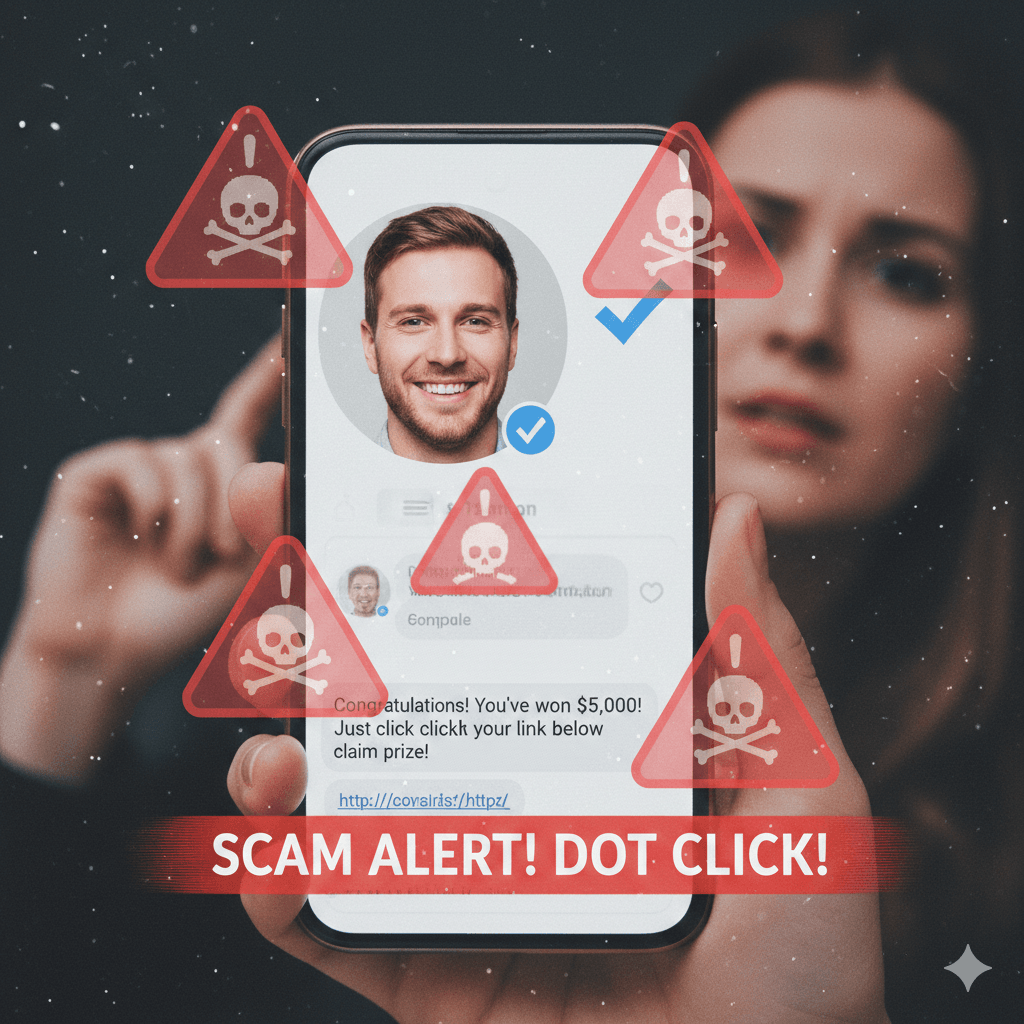
- Phishing for Account Access: You get a DM claiming your account is about to be deleted for copyright infringement. It includes a link to a fake login page designed to steal your password.
- Romance Scams: Scammers build long-term emotional relationships with victims, eventually asking for money for travel visas or emergency surgeries to meet in person.
Red Flags to Watch For
If you encounter any of the following, your scam radar should be pinging:
- High Pressure: Act now or your account will be deleted in 1 hour!
- Strange Payment: Demanding payment via Gift Cards, Crypto, Zelle, or Wire Transfers.
- Too Good to be True: Offering passive income or high-end electronics at 90% off.
- Grammar/Style Shift: A friend suddenly starts using formal language or weird emojis they never used before.
How to Protect Yourself from Social Media Scam?
- Verify via another channel: If a friend asks for money, call them or text their actual phone number to see if it’s really them.
- Enable Two-Factor Authentication (2FA): Use an app like Google Authenticator so that even if they get your password, they can’t get into your account.
- Don’t click the link: If you get a security alert, go directly to the app or website yourself rather than clicking the link in the message.
- Check the About info: On many platforms, you can see if a profile has recently changed its name or where the account is located.
If you see a celebrity or influencer promoting a crypto giveaway in the comments, it is almost certainly a bot. Real giveaways usually happen on official verified pages with clear terms and conditions.