
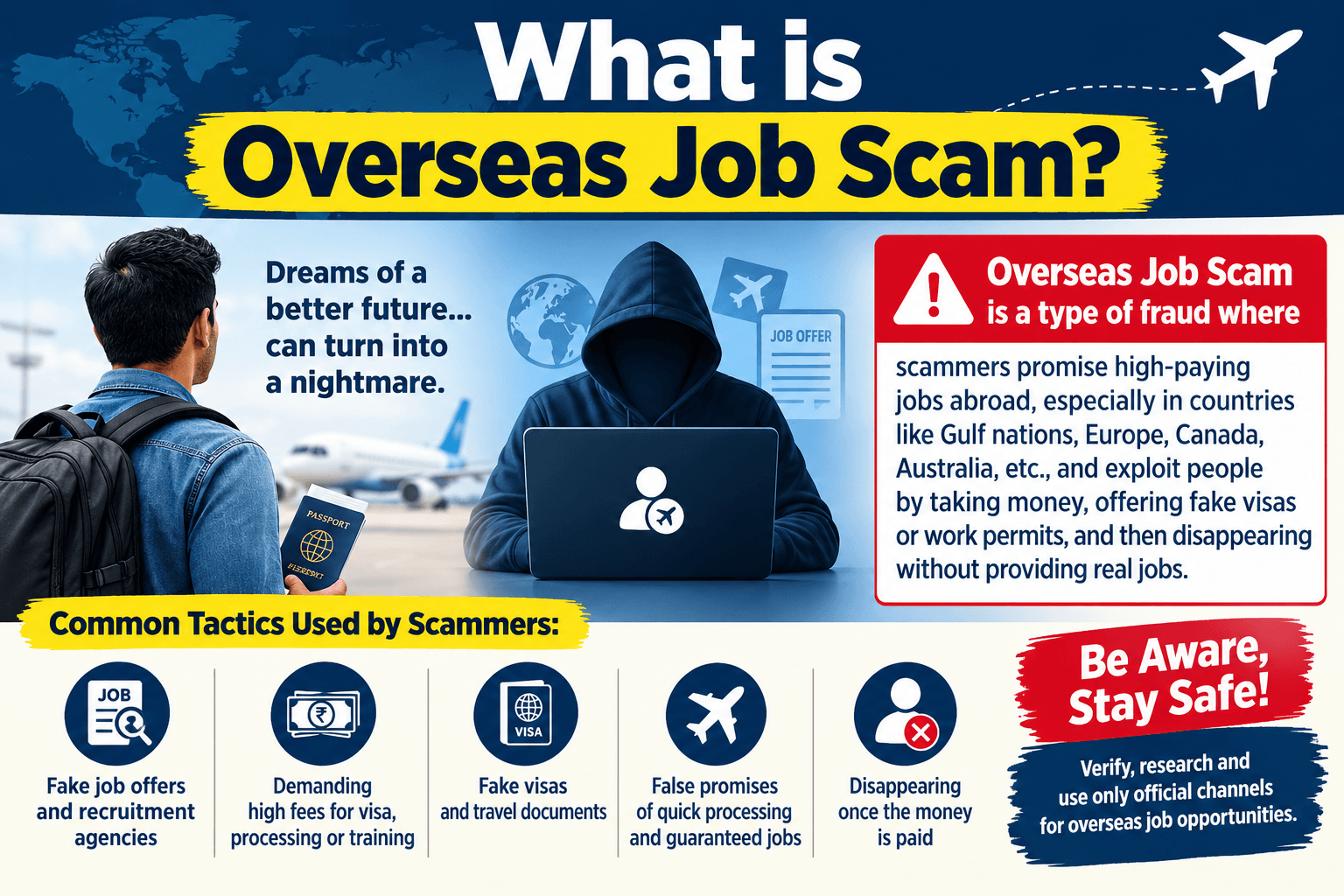
An overseas job scam is a fraudulent scheme where scammers trick job seekers usually by offering high-paying employment abroad with great benefits only to steal their money, personal information, or exploit them. Because many job seekers dream of working internationally for better pay and career growth, scammers frequently target them using sophisticated online tactics.
Common Red Flags of Overseas Job Scam
- “Too Good to Be True” Offers: Unusually high salaries, free housing, and luxury perks for entry-level or low-skill positions with little to no interview process.
- Upfront Fees: Demanding that you pay for visa processing, work permits, mandatory training courses, medical exams, or travel insurance out of your own pocket before they hire you (or before hiring you). Legitimate employers rarely ask candidates to pay for these expenses directly.
- Vague Company Details: Lack of a verifiable corporate website, professional email addresses (e.g., using @gmail.com or @yahoo.com instead of a company domain), or physical office addresses.
- Unsolicited Offers: Receiving a job offer out of nowhere on messaging apps (like WhatsApp or Telegram) or social media for a job you never applied for.
- No Formal Interview: A “recruiter” hiring you instantly via text message or chat without a video or in-person interview.

Common Tactics Used by Scammers
- The Visa & Processing Fee Scam: The “employer” extends a job offer and directs you to a specific travel agency or visa agent (who is actually part of the scam ring) to pay high fees for paperwork. Once you pay, they disappear.
- Fake Recruitment Agencies: Fraudsters set up professional-looking websites mimicking real international recruitment agencies or multinational corporations to build trust.
- Identity Theft: Scammers ask for sensitive documents early in the process such as your passport copy, social security/tax number, or bank details under the guise of “background checks” or “onboarding paperwork” and use them to steal your identity.
- The Check Overpayment Scam: You are sent a check to deposit into your bank account to cover travel expenses or equipment purchases, with instructions to wire a portion of the money back to a third party. The initial check eventually bounces, leaving you responsible for the withdrawn funds.
How to Protect Yourself?
- Verify the Employer: Independently look up the company through official registries, check if their website domain matches their official communications, and search online for reviews or scam reports associated with their name.
- Research Visa Laws: Check the official government immigration website of the destination country to understand the legal requirements for work visas and whether employers are legally allowed to pass those costs onto employees.
- Never Pay to Get a Job: Legitimate international employers invest in their candidates and cover recruitment costs. Never wire money, send cryptocurrency, or buy gift cards to secure employment.
- Keep Communication Professional: Be extremely cautious if a recruiter quickly shifts the conversation from a professional platform (like LinkedIn) to encrypted messaging apps.
If you suspect you have encountered an overseas job scam, you can report it to local cybercrime authorities or consumer protection agencies.